If you own an Oculus Quest or Go headset then hopefully you spent some of last week enjoying Tribeca Immersive’s Cinema360 programme which had 15 short films to enjoy. Tomorrow that trend continues as Bigscreen will play film festival host to documentary Ask No Questions.
Toronto-basedLofty Sky Pictures will be holding the event on the popular virtual reality (VR) app due to the current pandemic halting its festival run. Premiering at theSlamdance Film Festival in Park City during January, the VR screenings will offer a live Q&A with the filmmaker whilst helping to support the nonprofit Roxie Theater.
Four shows will take place tomorrow with tickets available through Eventbrite. The times for each screening are as follows.
1st Screening – 10 am PT / 1 pm ET
2nd Screening – 1 pm PT / 4 pm ET
3rd Screening – 4 pm PT / 7 pm ET
Final Screening – 7 pm PT / 10 pm ET
“VR is not a replacement for the cinema,” says “Ask No Questions”director/producer Jason Loftus in a statement “But with the world on lockdown, it’s the closest we can get to that shared experience that makes a film festival so unique. We also wanted to support an independent theatre because we believe it’s such an important platform for independent filmmakers.”
“Ask No Questionstells the story of a former Chinese state TV insider who is held in a brainwashing camp and compelled to accept the official narrative on a fiery public suicide, which he believes was a government plot,” explains the synopsis. “The film’s themes of misinformation, propaganda, and the perils faced by whistleblowers in China are timely given the initial coverup of the coronavirus and the reprisals faced by the initial whistleblowing doctors.”
Bigscreen Beta supports a wide range of headsets including HTC Vive, Valve Index, Windows Mixed Reality, Oculus Rift, Oculus Go and Oculus Quest, all for free – no PlayStation VR support at the moment. As Bigscreen Beta continues to add further content, VRFocus will keep you updated on all the latest announcements.
By: Peter Graham Title: Slamdance Documentary Ask No Questions Moves Festival Run Onto Bigscreen Tomorrow Sourced From: www.vrfocus.com/2020/04/slamdance-documentary-ask-no-questions-moves-festival-run-onto-bigscreen-tomorrow/ Published Date: Mon, 27 Apr 2020 21:19:19 +0000
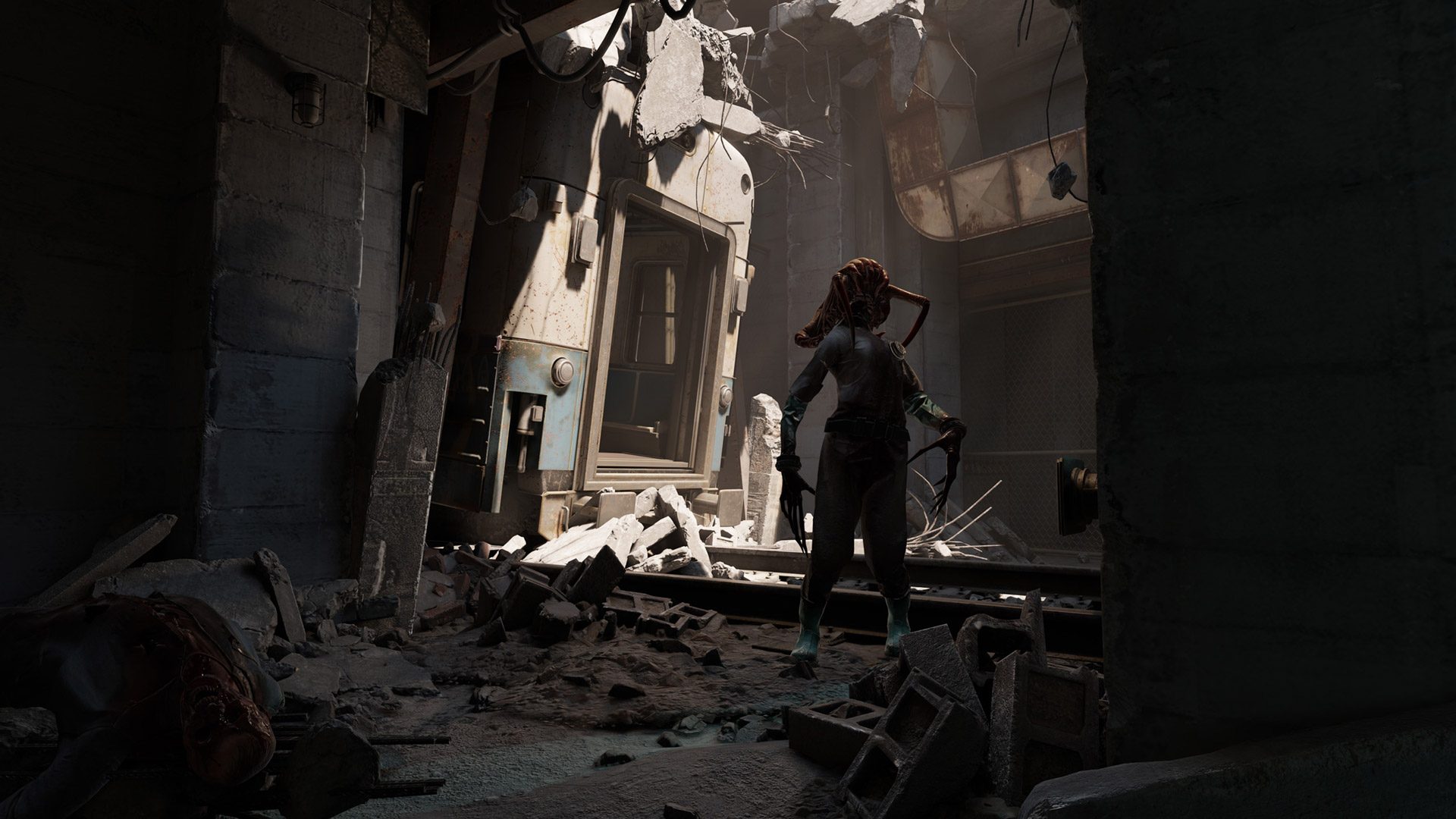
Half-Life: Alyx (2020), Valve’s made-for-VR entry into the fabled Half-Life series, launched late last month on SteamVR-compatible headsets to near-universal praise. If you don’t own a VR headset but still want to play though, I’d caution you against playing it for the first time with the new, unofficial PC monitor mod. Get a VR headset and don’t spoil it for yourself.
Whatever your opinion on the nuts and bolts of Half-Life: Alyx, it’s actually an honest-to-goodness VR game, and not a glorified experimental mod like we’ve seen in the past. There’s nothing wrong if you like playing those sorts of VR-supported titles (Alien: Isolation is great, don’t get me wrong) but with four years of consumer VR under our collective belts, it’s safe to say we’ve moved beyond those sorts of things from a game design standpoint.
Valve has made many ground-up VR design choices, rendering the game ostensibly un-portable to traditional monitors. I say ‘ostensibly’, but it seems that there’s now a keyboard and mouse mod for Half-Life: Alyx, which you can see in action below in the developer’s promo.
I won’t go as far to say the mod is entirely terrible per se. It no doubt took time and dedication to make, but it definitely feels like it’s entirely missing the point of VR’s existence. Looking past some of the inherent jank, which you can see when the user moves his POV too quickly for the renderer to catch up, there’s so much you’d miss out on by jumping the proverbial VR turnstile and playing Half-Life: Alyx on your monitor.
Getting Handsy
Motion controllers aren’t just there so you can breathlessly inspect the front and back of your hands in virtual reality. They’re actually additive to immersion in other, more important ways.
The fact that the controllers themselves have very few buttons in comparison to a keyboard, and are closer to gamepads in manufacture, shouldn’t fool you into mistakenly writing off VR controllers as a more simplistic input method.
Image courtesy Valve
Motion controllers may offer less ‘mechanical’ complexity, however VR game designers instead focus on creating ‘virtual’ complexity with things like shooting and reloading weapons, throwing objects, gestural commands, managing resources—all the things that would otherwise be handled with a scroll, hotkey or floating 2D menu.
That doesn’t mean using motion controllers is exactly effortless at first blush either, but provided you grew up with working hands, reaching forward and grabbing something is probably second nature to you by now.
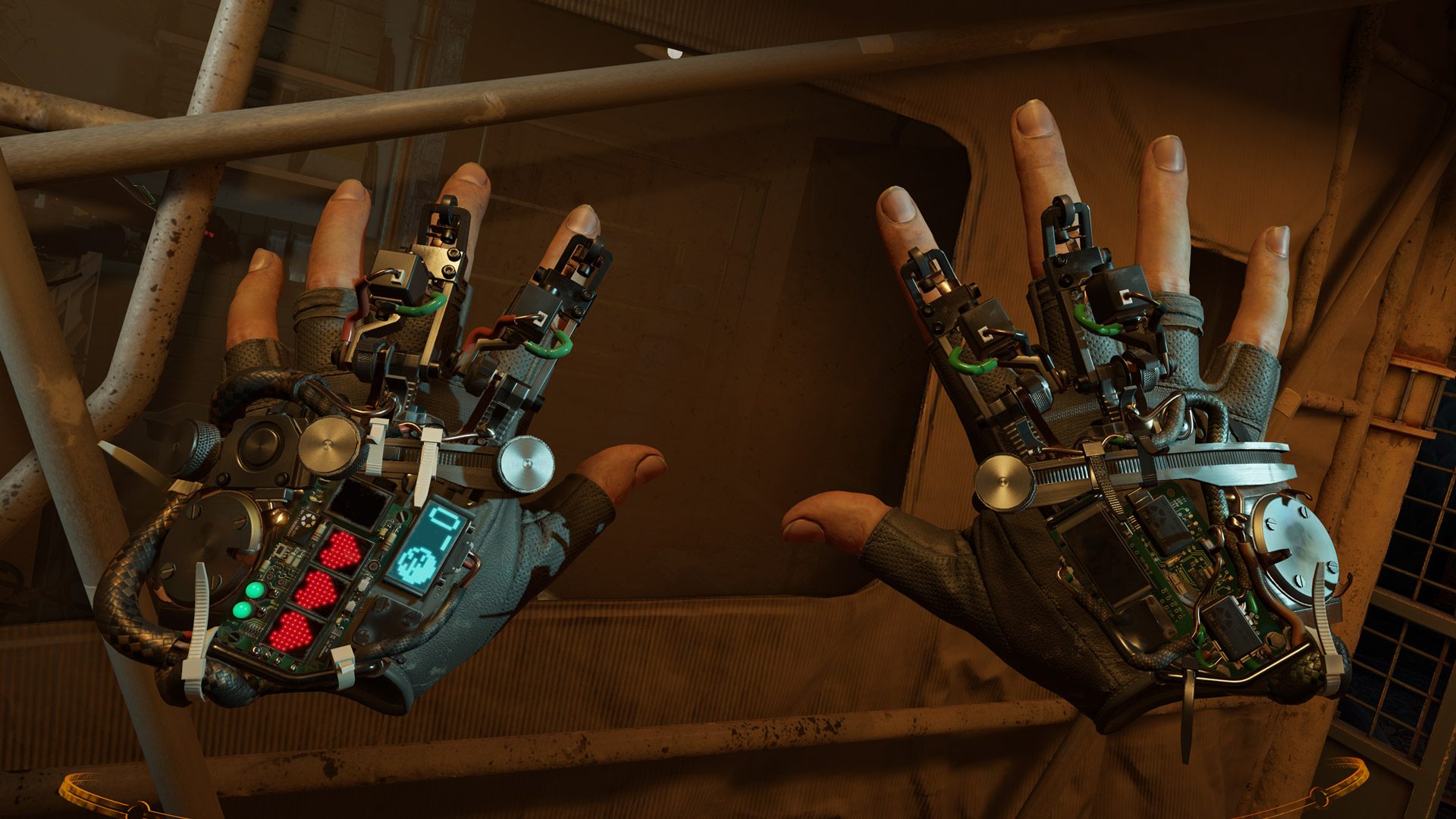
Doing a common task like reloading a magazine, force grabbing a grenade with your ‘gravity gloves’ and throwing it through a broken window while shooting a head crab in one smooth chain of movements is a whole different experience to whipping your viewport around with a mouse and pressing a combination of ‘E’, ‘1’, scrolling the little mouse wheelie and left clicking. Executing the somewhat bizarre dance of hitting key combos may be commonplace for entrenched PC gamers, but it doesn’t get any more bizarre than when you try to essentially drag your limp virtual hands with your face and grip with a left click.
While motion controllers are fundamental to interacting with those sorts of objects, it’s fair enough to say you can technically abstract those tasks away simply enough with cursor and a few key strokes to some extent. But when confronted with 3D puzzles, like Half-Life: Alyx’s many puzzles, both dexterity and the ability to naturally look around is key. That’s where the mod really starts to break down and you really wish you had a VR headset.
SEE ALSO
9 'Half-Life: Alyx' Mods We'd Love to See
Immersion is King
Like fun, fear is also subjective, although it’s hard to argue that you’d be more afraid of an enemy when sitting in front of a monitor as opposed to confronting it in stereoscopic 3D. I’ve played my fair share of flastcreen horror survival games that have left me barely able to blink, but nothing has prepared me for the terrifyingly immersive feeling of something literally breathing down my neck.
Watching Twitch streams of Half-Life: Alyx played in VR doesn’t do it justice either. The game’s comparatively fewer enemies look laughable when compared to the never-ending hordes of Half-Life titles past. It seems Valve’s mantra throughout creating Alyx was ‘less is more’, as each enemy requires more user concentration to kill in VR than with a mouse and keyboard, making it an objectively less interesting game when viewed through the lens of a computer monitor. Not so in VR. One name comes to mind (no spoilers) and it rhymes with ‘Reff’. Enough said.
Image courtesy Valve
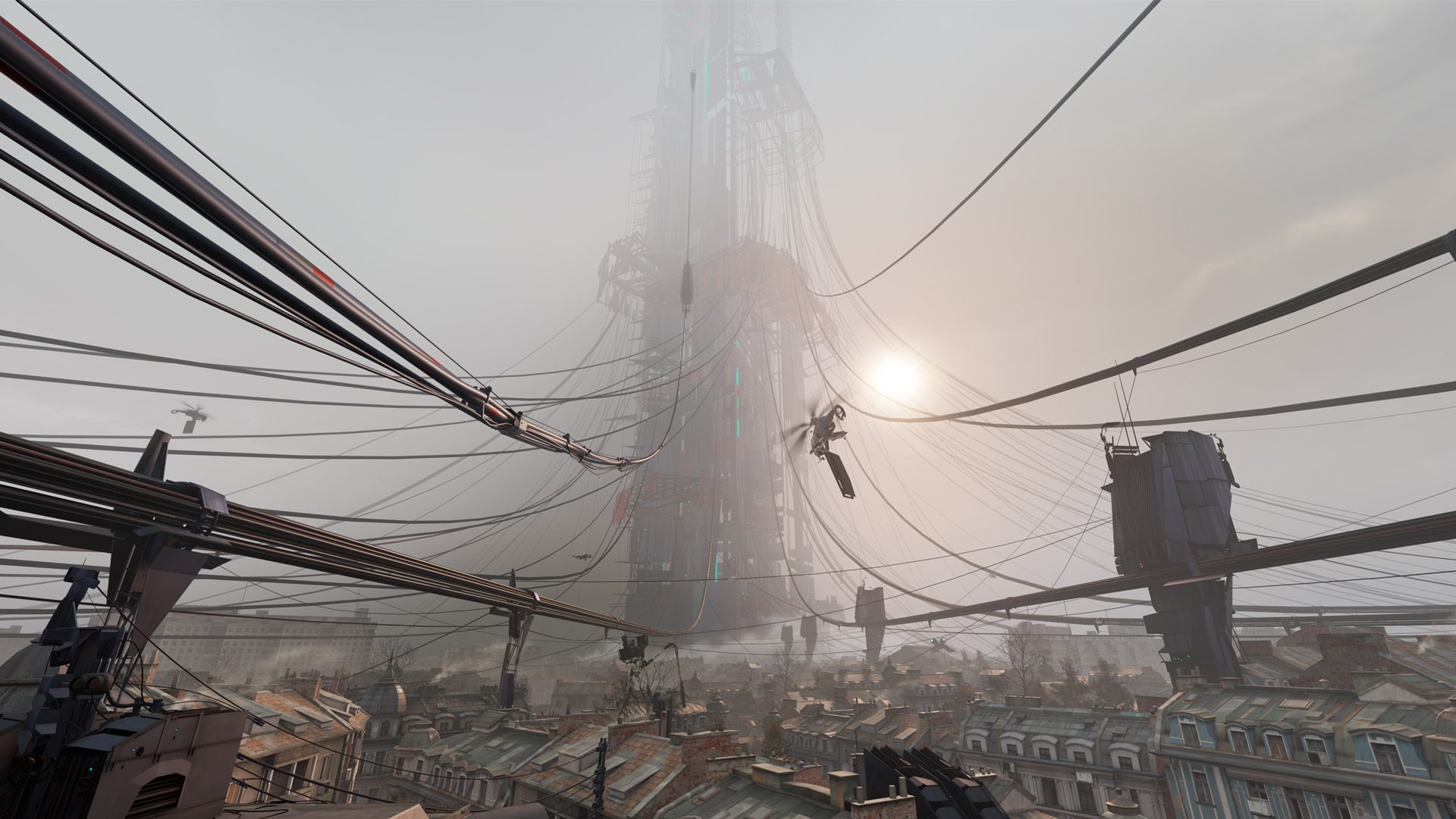
Flatscreen videos of the game only show a thin slice of its environments too. And not to understate just how visually stunning Half-Life: Alyx’s visuals are, which feature a wide range of interactive objects and detailed interiors and exteriors—as a new VR user you might be surprised at just how much of this immersion comes from positional audio. Something clicks in your brain that says “I’m really here” when you turn your head and audio is anchored to your skull correctly. Even more so when that audio is coming from a headcrab lurking in the airduct above your head.
Wearing a VR headset is essential to syncing up these perceptual systems, putting you more on edge in a game like Half-Life: Alyx than you might normally be at your desk. Check out our interview with game designer Robin Walker to get an inside peek at Valve’s development process, which approached the game’s development with a ‘one room at a time’ design philosophy.
Image courtesy Valve
That said, even if the PC monitor mod gets more polish to the point that it makes HLA look like a native PC game, it would still be missing these fundamental pillars of immersion that just aren’t worth hobbling to say you finally played the first Half-Life game released in over a decade. You’ll blow past intricate rooms just begging to be explored. You’ll frustratingly fumble with objects that would take you a split-second to pick up and throw in your inventory. You’ll rob yourself of what we considered a [10/10] VR gaming experience.
A word of advice: get a used headset for cheap. Hunt online for a deal on a new, cheaper headset like an Oculus Rift S. Heck, borrow a 2016-gen PC VR headset from a friend. Play it in VR. You bought the game, so you might as well actually enjoy it.
– – — – –
If you’re still curious you can download the driver on GitHub, which includes a quick installation guide. Just don’t say we didn’t warn you.
The post Why You Shouldn’t Play ‘Half-Life: Alyx’ Without a VR Headset appeared first on Road to VR.
By: Scott Hayden Title: Why You Shouldn’t Play ‘Half-Life: Alyx’ Without a VR Headset Sourced From: www.roadtovr.com/half-life-alyx-flat-screen-mod/ Published Date: Mon, 27 Apr 2020 17:41:48 +0000
Ever since the Oculus Rift was first introduced, people have wanted a Mirror’s Edge VR game. Years later, Stride looks to deliver where EA hasn’t.
The first footage for Stride, which debuted over the weekend, promises essentially a VR doppelganger of DICE’s beloved series. Players hop between rooftops using parkour, avoiding enemy gunfire and taking opponents down as they go. But while the game sounds similar to Mirror’s Edge, it looks practically identical; bleached-white buildings are peppered with vibrantly-highlighted objects you can use for progression. If you told us this was an official game in the series, we might even believe you.
But we shouldn’t let Stride’s clear visual style get in the way of what looks like a genuinely interesting approach to VR free-running. From the gameplay, it looks like huge leaps can be saved with last-minute ledge grabs, and you can often choose melee combat over gunfire. Plus there are all the staples you’d expect: wall-running, climbing up pipes and grinding along wires.
Story-wise, Stride is set in a quarantined city (imagine that). You take to the rooftops as rival gangs war over the remains of the metropolis.
Now, obviously this looks like a fairly intense VR experience, one that will surely be uncomfortable for a lot of people. However, on the Steam page, developer Joy Wave says that the game “does not cause significant motion sickness.” We’ll want to get our hands on it for ourselves to really test that out, though.
Developer Joy Wave says the game is coming this summer. Look for it on Steam with support for all major PC VR headsets.
The post Stride Is Mirror’s Edge VR In Everything But Name appeared first on UploadVR.
By: Jamie Feltham Title: Stride Is Mirror’s Edge VR In Everything But Name Sourced From: uploadvr.com/stride-mirrors-edge-vr/ Published Date: Mon, 27 Apr 2020 13:55:54 +0000
Covering the immersive Out-of-Home entertainment scene for VRFocus, in his latest Virtual Arena column, industry specialist Kevin Williams reports – concluding this two-part feature. The impact of the latest trends in free-roaming VR attractions is looked at, as well as the continued success of VR enclosure business. Then the report turns its gaze to the impact of the health crisis, and what life for the VR entertainment scene could be #AfterLockdown.
Amusement Expo International: Image credit KWP
Returning to the surprisingly crowded show floor of the influential B2B Amusement Expo International (AEI) in New Orleans, during early March. Days before the global health crisis would shut down all commerce – this show revealed the key trends and issues that would need to be reevaluated for a market in transition after lockdown.
Moving away from the approach of standalone VR amusement platforms, seen on the show floor that conformed to the more traditional pay-to-play model (covered in the first part). The amusement and entertainment facility sector had been revolutionized by the appearance and deployment of multi-player videogame experiences that offer a compelling attraction.
This approach has seen two unique categories – the first being “VR Enclosure” systems, these using frameworks to cordon off the player space. This has become a distinctive category of its own, and one of the most successful developers of this approach is Hologate. The company based in Germany has sold hundreds of their four-player systems across the market and came to AEI with an updated ‘HOLOGATE Arena’ – offering a compact two-player version of the system, to suit all sizes of location.
VR teamwork in the latest blaster from HOLOGATE. Image credit: KWP
Another developer of this kind of VR enclosure system was from Minority Media, having developed its own small foot-print enclosure, the operation was promoting its latest dedicated game system with ‘Transformers: VR Battle Arena’. Based on the popular Hasbro franchise, four players compete in a player-vs-player blaster, taking part as the famous robots in a fast base and competitive experience.
Looking at a larger enclosure offering, AEI exhibitor Inowize, in partnership with their lead distributor had their six-player enclosure system called the ‘Arkadia VR Arena’. The platform using the HTC Vive Pro headsets, tethered to the ceiling of the enclosure, offering a multiplayer immersive game experience. The flexibility of the system also offering a four-player variant.
The need to offer the latest platform that achieves the best ROI is essential in a fast-moving sector such as VR amusement and entertainment deployment. The latest variants of the VR enclosure category have started to use the new and emerging VR technology. Manufacturer Box Blaster has created a dedicated enclosure to suit the needs of the market, using the latest Valve Index high-end VR headsets for their four-player ‘Box Blaser VR’. And have focused on a family-friendly approach for their content to drive the key demographic interested in trying VR experiences.
Box Blaster VR. Image credit: KWP
Purpose-built enclosures that allow entertainment facilities to run their own VR arcade-style operations, to compete with independent venues, was also on display. The new developer Sektor VR presented at AEI, their enclosure called the ‘Sektor 001’ that used a giant LED spectator screen to allow the audience to see the virtual environment that the players inhabit. The enclosure allowing two players at a time, both using wireless HTC Vive Pro headsets. As with all in this category, the operation is from a touch-screen kiosk, offering a selection of games provided through the popular Springboard VR content distribution platform.
One of the largest and most impressive of the enclosure systems is that offering from Virtuix – a completely enclosed environment offered by their ‘Omni Arena’. The attendant attracting players to come inside the system, prepare to enter the VR environment using the innovative omnidirectional treadmill, to physically navigate the virtual world. Virtuix has worked hard to create a competitive game environment and were running cash prize ‘VRZ Tournament’ during the show, illustrating the eSports credentials of their hardware.
As we saw leading up to the Health crisis, interest in “Arena Scale VR – Standalone” (the second leading category) has grown exponentially. These represented the deployment of the next innovation in tech, with the Standalone VR headsets such as Oculus Quest, Pico Neo2, HTC Focus Plus, and other systems offering a VR multi-player platform. That could be a cheap alternative to the more expensive and complicated backpack PC VR platforms, for area-scale (free-roaming) deployment. As covered in VRFocus recently this sector still garners much interest with developers like VirtuaActions and their ‘Cyberaction Arena’.
VEX Arena. Image credit: KWP
The March AEI show reflected the growth of popularity in this trend across the trade floor. Those companies exhibiting with their entry into this category included VEX Solutions with its ‘VEX Arena’ representing a six-player free-roaming turn-key system. The platform building on the operations’ experience with backpack VR systems. The new ‘VEX Arena’ uses specially customised Pico Neo2 headsets. A flexible arena platform that can accommodate four, six, eight and even 10-player configurations.
Another exhibitor with this category of experience was Arenaverse – showing its ‘Arenaverse’ platform, offering a free-roaming system requiring a minimum footprint of 20ft x 30ft – a totally scalable platform ranging from two players all the way up to twelve. An operation comprising accomplished VR executives in this field, many of the lessons from previous endeavours have been applied. Recently coming out of secret development, the platform comprises a unique operator kiosk that charges the headsets and launches the experiences.
The AEI exhibitor, Scale-1 Portal, is an official Oculus IVS Partner, and presented using the Oculus Quest headset, their new ‘Voxel Arena’ – one of the first official standalone free-roaming four-player spaces, crafted to offer unique multi-player specialist experiences. One of these unique titles is the energetic rhythm music game (‘RYTM’), played as a group in a highly frenetic immersive music experience.
Voxel Arena. Image credit: KWP
This is a snapshot of the considerable impact that VR had on the last major amusement and entertainment trade event of the post-pandemic market. The March Amusement Expo was driven by the innovation that VR was having on the industry, seeing 10% of the exhibitors on the show floor offering a VR solution of some kind.
VR Entertainment’s Future
From all the developments that were presented at the beginning of March, the then Out-of-Home entertainment sector looked to be continuing its rapid growth in market dominance. But this advance would be placed on hold as global commerce was impacted by the ravages of the COVID-19 epidemic. With all Western VR arcades and location-based entertainment centres shuttered, the industry has been placed in hibernation, eager to re-emerge.
One of the many shuttered location-based entertainment facilities. Image credit: KWP
Going into these latest weeks of lockdown for the entertainment, hospitality and non-essential businesses, across the West; there is a mood towards attempting to understand what the #AfterLockdown future business for location-based entertainment (LBE) VR will look like. Many operators drawing up plans on how they will welcome their guests to the new landscape of social entertainment in an evolving landscape.
The consumer VR scene while in lockdown has proven that the interest in this technology has not diminished, and with the successful launch of Valve’s Half-Life: Alyx, there has been a desire for more. Not every one of the record number of watchers of the streamed “lets-play” of the videogame has access to the VR hardware or intend to buy it, but this does not mean they would not pay heavily to be able to experience the title. And already plans are in place to support VR arcades to run this title as an option to their clientele.
Hygiene and safe operation of their experiences are a constant for the Out-of-Home entertainment sector long before we entered the grip of the pandemic. Numerous developers have added extensive cleaning and guest operation procedures to ensure that as with the 3D cinema sector (with 3D glasses), bowling sector (with shoes and socks), paintball sector (with goggles and masks) and even the Go-kart sector (with helmets and race suits), the guests experience is a clean and comfortable one. Many operators of VR hardware have deployed “Ninja Masks” (disposable paper liners for VR headsets) to customers using their hardware.
Manufacturers are also looking to incorporate dedicated self-disinfection systems to their hardware, similar to that seen with VR LEO USA’s platform (covered in the previous part) – as well as emulating the work that CleanBox Technology has been developing with their UV-C disinfection stations for VR deployment in enterprise. Companies also like VR Cover have supplied specialist versions of their system for use on most VR amusement platforms.
Operators of large numbers of VR headsets ensuring the manufacturers accommodate the needs of resilience and durability regarding deployment in entertainment. The extra development time that has been afforded to the industry during this hiatus will inevitably result in major development work, and increased ingenuity in the deployment of this technology into the market.
Once the restrictions of isolation are eventually lifted and the population is allowed once again to enjoy themselves, there will be no doubt that VR entertainment will continue to play its part in the vast variety of offerings from the Out-of-Home entertainment landscape. But with increased burden on disposable incomes and concerns of venues operating under restrictions from local government, that the “new normal” for the sector will take some time to be defined with undefined new elements added to the mix. We await, with interest, to report on these new developments.
By: Kevin Williams Title: The Virtual Arena: The Changing VR Out-of-Home Landscape – Part 2 Sourced From: www.vrfocus.com/2020/04/the-virtual-arena-the-changing-vr-out-of-home-landscape-part-2/ Published Date: Mon, 27 Apr 2020 13:00:46 +0000
Altoura offers VR/AR immersive training software free to companies and organizations fighting Coronavirus
Altoura announced Monday it will give free licenses for its immersive VR/AR training and collaboration software for use in finding a COVID-19 vaccine or making health care supplies. The virtual and augmented reality startup joins the ranks of companies, big and small, around the country that are jumping to respond the challenge of our time.
The company isofferingfree licenses for six months to its Altoura Immersive Reality Platform (VR/AR/MR) and at-cost digital twin and training design services to companies or organizations, private or public, that are working on a COVID-19 vaccine or manufacturing supplies, like ventilators, PPE and testing kits, for health care workers. The licenses can be extended, if needed.
Based inSeattle, Altoura builds virtual reality, augmented reality and mixed reality enterprise solutions for immersive training, layouts and virtual tours. The award-winning solutions run on iOS (iPhone and iPads), Android, Windows PC and the HoloLens 2. It supports multi-user remote collaboration. Hundreds of companies have used Altoura’s web-based VR tours and its app-based immersive training and collaboration software.
“We know that we can provide a layer of safety and productivity with our immersive training software,” saidJamie Fleming, CEO of Altoura, which is a Microsoft Mixed Reality Partner.
Fleming’s offer to provide his company’s software licenses for free and to discount their design services is motivated by the very real dangers and pain it has caused in his own backyard. He is reaching out to business leaders to work together to find solutions to the global pandemic and its ensuing havoc.
“I believe there is an imperative for all of us to work together to find solutions,” he said. “Coronavirus has struck so many in my community and our loved ones.”
Even prior to the global pandemic, Altoura was working with customers likeThermo Fisher, Walgreens and Microsoft and continues to support them as they pivot as part of their emergency response.
Many companies already employ virtual training for the cost savings from reduced travel and the ability for employees to train anywhere, any time. With the Altoura software, environments can be experienced in virtual or augmented reality and training is delivered immersively. This has the benefit of reducing the need for in-person interactions and travel – two factors that may be the difference between life and death in the face of this global pandemic.
According to internal research, collaborating and training immersively accelerates learning by raising the learner’s engagement, increasing information retention and reducing errors. Plus, companies can safely train their workforce in unsafe environments.
“Altoura allows us to train our people safely in unsafe situations,” saidAmanda El Bahou, manager of Qantas Group Learning Technology. Altoura recently built an immersive flight simulator for Australian airline giant Qantas.
Contacttogether@altoura.comto find out more about the free software license offer for the Altoura Immersive Reality Platform (VR/AR/MR).
SOURCE Altoura
The post Altoura offers VR/AR immersive training software free to companies and organizations fighting Coronavirus appeared first on Virtual Reality Reporter by VR Reporter
By: VR Reporter Title: Altoura offers VR/AR immersive training software free to companies and organizations fighting Coronavirus Sourced From: virtualrealityreporter.com/altoura-offers-vr-ar-immersive-training-software-free-companies-organizations-fighting-coronavirus/ Published Date: Mon, 27 Apr 2020 08:00:26 +0000
Find out how the strange VR styling game came to be.
With hairdressers and barbers staying home to help flatten the COVID-19 curve, quiffs are growing into mullets, pixie cuts are becoming shags, and afros are turning into, well, slightly larger afros.
People are literally protesting the quarantine because they want a haircut, but maybe what they actually need is VR and a healthy dose of reality.
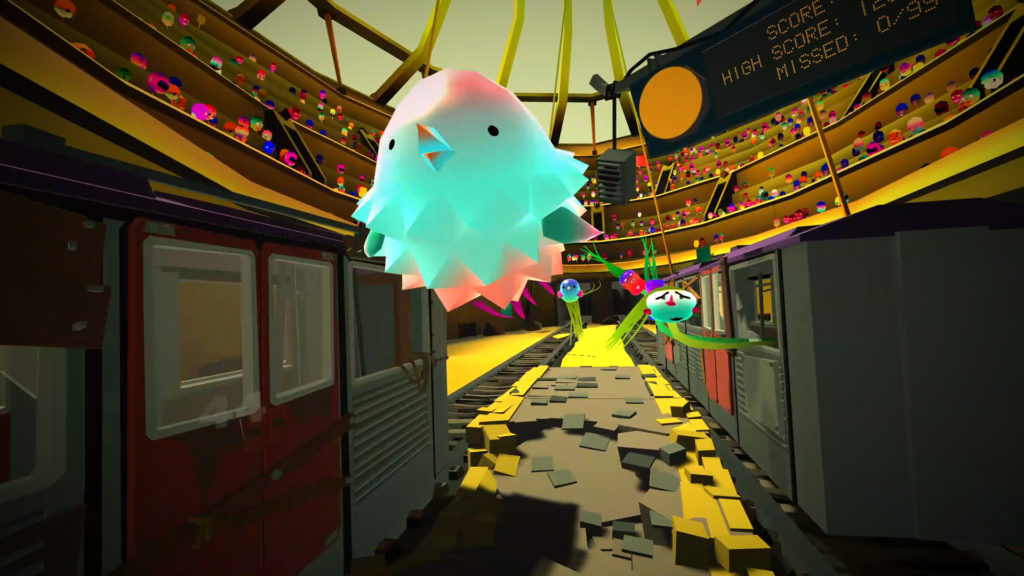
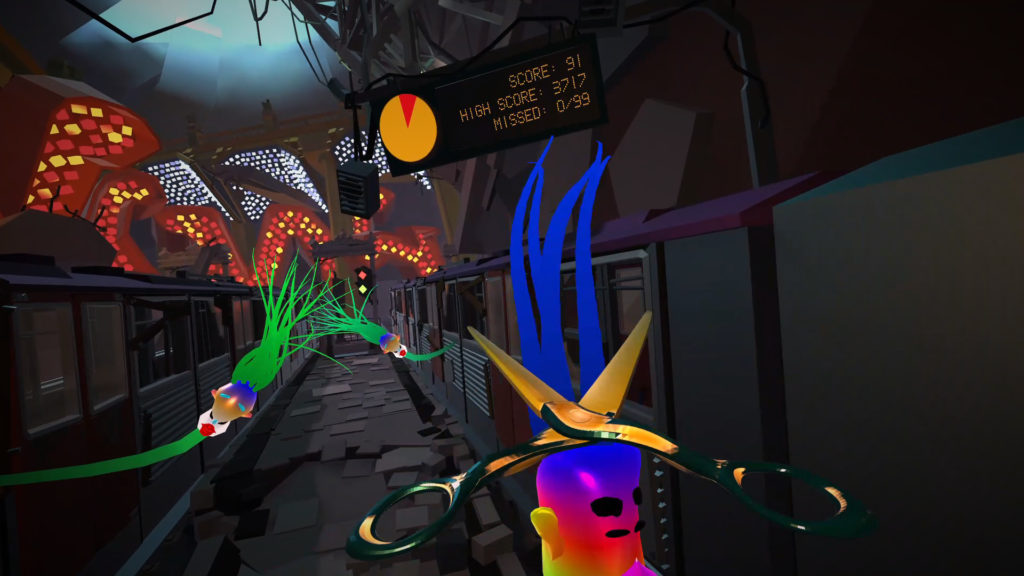
Bizarre Barber, an Oculus Launchpad title, is a curious and playful haircutting adventure for all ages. Interestingly enough, however, it actually started as a cultural critique of Western ways. Players find themselves in a cartoonishly stylized post-apocalyptic world where they are tasked with quickly trimming up the wild ‘dos of colorful characters who come whizzing impatiently past. Humanity has moved underground, and there are no more comfy barber chairs left in the world. Your clientele has mutated into bizarre long-necked humans in desperate need of a haircut, and it’s your job to satisfy the disheveled masses.
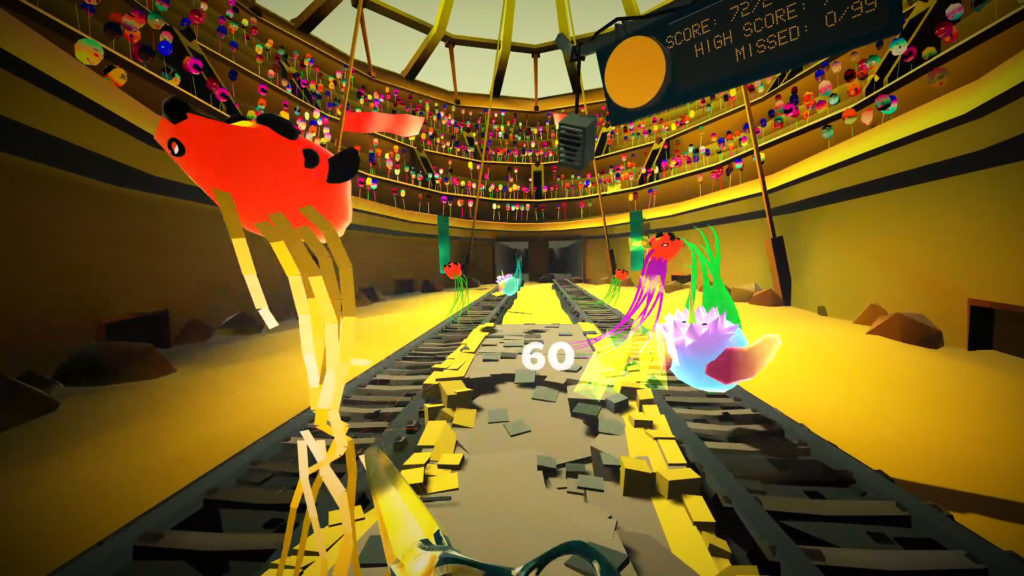
The game begins with you standing between two subway trains while holding a giant pair of golden scissors that you operate using both hands. As the trains move forward, people with long flowing hair start sticking their heads out of the windows, at which point you need to start chopping as fast as you can. Each successful haircut earns you points. In addition to tangled hair, you’ll need to dodge various obstacles and catch speed boosts and power-ups; you can even earn some cash (because cash still matters, even during the apocalypse) to unlock new worlds and new tools, like sword-hands!
As the game progresses, levels become harder. You’ll eventually evolve from cutting human hair to trimming the feathers off of drunk birds and the hair from mutated cows and flying rats. Eventually you’ll make it to the boss level, where your reflexes will need to be scissor sharp in order to defeat the United Underground’s hairiest president.
Similar to VR rhythm games like Beat Saber, Bizarre Barber features a bumping soundtrack that you can dance along to as you cut that hair. It’s a physical and chaotic game, so be prepared to work up a sweat as you frantically move your arms in a giant chopping motion, all while you’re squatting, reaching, and wiggling your way through the levels.
Bizarre Barber is much more than a simple hair cutting game, however. It’s actually a response to the creators’ own immigration to America 5 years ago. When Maria Mishurenko and Gordon Cherny first arrived in NYC, they witnessed everything the city had to offer. The original hairstyles, unique people, new music, diverse food, the list goes on. They also saw pollution, the never-ending hustle, and the daily struggle to define oneself in a place with millions of souls.
On behalf of the Bizarre Barber team, Mishurenko answered a few questions for VRScout about designing the experience:
Why did you create this game?
“The game was my thesis project at the NYU Game Center, where I went to grad school for the game design degree. Bizarre Barber is also the reflection of its creators, two immigrants from post-Soviet Central Asia in American culture. When [Gordey Chernyy, my partner and Bizarre Barber co-creator, and I] first arrived four years ago, America seemed like a surreal alien planet: diverse, mysterious, ridiculous, and hard to grasp. It’s been very hard to communicate our thoughts and feelings to our new American friends (especially when we couldn’t speak any English) so art became the easiest way of communicating all those complex feelings and impressions. The game is an allegorical, artistic, visual, and narrative expression of how two immigrants perceive America, the country that eventually let many of their dreams come true.”
What do you hope players get out of playing it?
“I hope our players feel genuine fun, joy, and experience flow while playing. It’s very important to have fun, enjoyable experiences to ease the anxiety and connect with natural body movements! We also have a subtle underlying commentary on the state of American capitalism and dwindling apocalypse and I was very glad to see that many players picked it up and laughed at it.”
What was the process of creation for your team, from dreaming to distribution?
“The game was conceived as a fun experiment that was supported by IGDA and Play NYC in 2018. We quickly made and tested the prototype and liked it a lot. That summer of 2018 we also participated in the Oculus Launchpad program and decided to develop a vertical slice of the game and submit it for the funding competition. There were more than 100 participants in the program and we ended up being one of four winning teams! I then made the game my thesis project and NYU Game Design faculty guidance helped us a lot to define the scope, polish the game design ideas, and conduct the research on players. Corey Bertelsen, NYU professor, and game designer joined the team as Audio Lead and our game got amazing music and sound design.”
“Later, in summer 2019 we got into NYU Game Center incubator, a highly competitive program for experimental games, and got additional funding from them. We spent the summer working on marketing plans and finishing the game alpha version. In the fall, we partnered with VRBar in New York and started testing for an arcade and tournament version of the game. [We then spent] two recent months basically fixing bugs, doing quality assurance, signing an agreement with various business partners, preparing to release and then the release itself!”
Fun fact about the game that we don’t know?
“One of the voice actresses for Bizarre Barber is Gabrielle Mirabella, a professional opera singer! We recorded a lot of bizarre opera singing, but haven’t used it in the game yet (saving it for one of the updates!).”
Not everyone who plays Bizarre Barber will have that deeper experience, and that’s okay. Ultimately Mishurenko, Cherny, and Bertelsen just want you to have fun.
There are 13 levels to play scattered throughout 7 unique VR worlds. The game is pretty self-explanatory, therefore there are no tutorials, which makes it the perfect game for someone who is trying VR for the very first time, but it’s also challenging enough that any VR expert would have a blast playing.
Professional Stylist/Photographer Tina Pelech who has worked with multiple modeling agencies and with models from America’s Next Top Model, talked with VRScout about haircuts and Bizarre Barber saying, “This game sounds amazing, but I’d probably get exhausted from playing because you are actually exercising!” Pelech adds, “It would definitely help me release a lot of stress for those clients that never want to cut their hair. I’d be cutting it like I was Edward Scissors Hand!”
Bizarre Barber is available now on Steam, Viveport, and Oculus! The official soundtrack is available separately on Bandcamp!
Image Credit: Synesthetic Echo
The post VR Haircut Experience Is Actually A Message About American Capitalism appeared first on VRScout.
By: Bobby Carlton Title: VR Haircut Experience Is Actually A Message About American Capitalism Sourced From: vrscout.com/news/vr-haircut-bizarre-barber-american-capitalism/ Published Date: Sun, 26 Apr 2020 18:49:38 +0000
The virtual and augmented reality (VR/AR) industries are wonderfully diverse when it comes to the job roles available, always looking to hire the best talent to work on exciting projects. Whether you’ve been an avid fan of the tech for a while or are already involved in some way, today’s VR Job Hub has plenty of new roles which can help you become more involved and shape VR/AR’s future.
Location
Company
Role
Link
London, UK
Sony London Studio
Animator – Senior/Mid Level
Click Here to Apply
London, UK
Sony London Studio
Art Director
Click Here to Apply
London, UK
Sony London Studio
Game AI Programmer
Click Here to Apply
London, UK
Sony London Studio
Lead Gameplay Designer
Click Here to Apply
London, UK
Sony London Studio
Lead QA Tester
Click Here to Apply
London, UK
Sony London Studio
Network Server Programmer
Click Here to Apply
London, UK
Sony London Studio
Senior Level Designer
Click Here to Apply
London, UK
Sony London Studio
VFX Artist
Click Here to Apply
Prague, Czech Republic
Beat Games
Level Designer
Click Here to Apply
Prague, Czech Republic
Beat Games
UI Designer
Click Here to Apply
Prague, Czech Republic
Beat Games
Graphic Designer
Click Here to Apply
Prague, Czech Republic
Beat Games
Software Engineer, Backend
Click Here to Apply
Prague, Czech Republic
Beat Games
3D Artist
Click Here to Apply
Guildford, UK
Supermassive Games
Senior Game Programmer
Click Here to Apply
Guildford, UK
Supermassive Games
Animation Programmer
Click Here to Apply
Guildford, UK
Supermassive Games
Tools Programmer
Click Here to Apply
Guildford, UK
Supermassive Games
Senior Character Artist
Click Here to Apply
Guildford, UK
Supermassive Games
Technical Artist
Click Here to Apply
Don’t forget, if there wasn’t anything that took your fancy this week there’s always last week’s listings on The VR Job Hub to check as well.
If you are an employer looking for someone to fill an immersive technology related role – regardless of the industry – don’t forget you can send us the lowdown on the position and we’ll be sure to feature it in that following week’s feature. Details should be sent to Peter Graham (pgraham@vrfocus.com).
We’ll see you next week on VRFocus at the usual time of 3PM (UK) for another selection of jobs from around the world.
By: Peter Graham Title: The VR Job Hub: Sony London Studio, Beat Games & Supermassive Games Sourced From: www.vrfocus.com/2020/04/the-vr-job-hub-sony-london-studio-beat-games-supermassive-games/ Published Date: Sun, 26 Apr 2020 14:00:33 +0000





 Manufacturers are also looking to incorporate dedicated self-disinfection systems to their hardware, similar to that seen with VR LEO USA’s platform (covered in the previous part) – as well as emulating the work that CleanBox Technology has been developing with their UV-C disinfection stations for VR deployment in enterprise. Companies also like VR Cover have supplied specialist versions of their system for use on most VR amusement platforms.